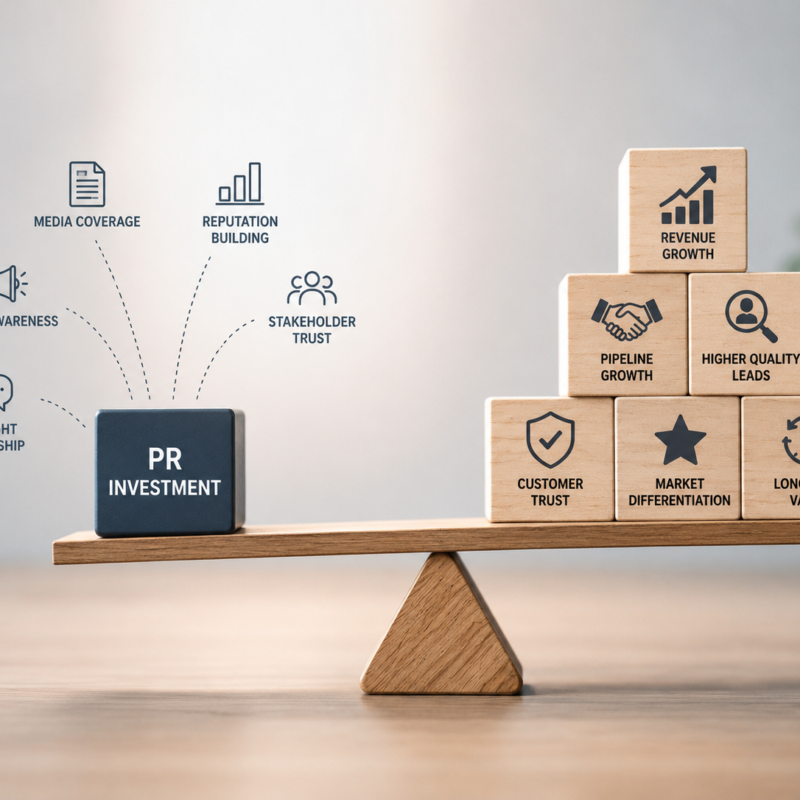
The best startup PR can benefit high-growth companies in numerous ways, and top investors believe it’s the most effective marketing tool for startups. BMV has developed a public relations framework to serve the unique needs of technology startups and challenger brands in San Francisco, Los Angeles, Boston, and globally. BMV’s approach helps your startup drive customer growth and increase valuations in the eyes of potential investors, partners, and future acquirers. A PR agency trusted by deep tech, fintech, SaaS, AI, eCommerce, mobile, and cybersecurity startups backed by Y Combinator, First Round Capital, Spark, Neo, Emergence Capital Partners, Initialized, and many other of the world’s top VC firms, the BMV team is adept at providing strategic communications for startups aiming to scale growth and achieve successful exits.
Start scaling today!







An Award-winning Approach to Startup PR
Strategic Messaging
Narrative development is a critical component of a startup’s PR strategy. Whether you are running an early stage startup or later stage company preparing for the public market, the ability to deliver a compelling story can elevate a startup’s brand above a crowded number of new entrants and as a worthy challenger to much larger industry incumbents. To enhance startup PR, BMV works directly with founders or in house PR teams to create a strategic framework and key messages that resonate with customers, employees, partners, the media, and investors.
Media Relations
When it comes to awareness, credibility, distribution, and driving inbound new business, media relations plays a critical role in successful startup PR programs. The BMV team includes some of the best media relations strategists in the technology field. As digital public relations experts, they know what stories will get media attention, the media outlets and platforms that will drive the most digital engagement across social media channels, and how to use content marketing to amplify efforts. Constantly looking to redefine digital PR, BMV also engages with the newest influencers, podcasters, and YouTubers to expand the media universe.
Thought Leadership
In addition to driving customer awareness and growth through startup PR programs, the BMV team is skilled at creating thought leadership programs that position founders as the next visionaries and industry experts within their respective fields. These programs elevate the standing of the executive leadership team while also increasing the company’s valuation in the eyes of potential investors and future acquirers. From ghostwritten contributed articles to scaling personal social media handles, the BMV team has a track record of building thought leadership platforms for tomorrow’s business leaders.
Speaking & Awards
Speaking programs can naturally expand thought leadership platforms and combine with award programs to build 3rd party validation for startups. As part of our public relations services, BMV works with event organizers and award judges across sectors to maximize the odds of securing inclusion for your startup. From creating abstracts to managing submissions, the BMV team handles each step as part of PR programs for startups. From booking appearances at TechCrunch events to targeting industry top 50 lists, BMV knows which speaking appearances and awards will drive traction.


Our Clients Have Been Recently Spotlighted In









Senior Tech PR Strategists for Your Startup
Over the last five-ten years, the way journalists cover startups and technology companies has radically changed. Amid startup controversies, media layoffs, and an overall pullback in the technology market, it’s more challenging than ever before for communicators to secure positive media coverage for their startups. However, while it is harder to garner earned media, today’s business outcomes from press coverage may be greater than ever before.
The fallout of the fake news era has created an appetite among consumers and business leaders for trustworthy information from credible media outlets. As a byproduct, digital news articles are driving product awareness, and, ultimately, purchases, more effectively than new digital alternatives. BMV understands the unique challenge and opportunity for venture-backed startups looking to stand out in today’s 86,400-second news cycle. With decades of technology sector expertise, BMV’s tight-knit team of senior communications strategists has a proven track record of supporting hundreds of startups as they’ve scaled and achieved exits worth hundreds of millions of dollars.
Decades of technology communications expertise
Deep media relationships with technology journalists
Data-driven PR campaigns
Trusted by top VCs and serial entrepreneurs with developing impactful startup narratives
Seamlessly integrates with a startup’s internal communications team and/or VC’s PR team
Supported growing 100’s of startups to exits totaling $500M+
Startups Don’t Need a PR Agency They Need a Hybrid Communications + Marketing Firm
Given the limitations of only relying on media relations today, paying for traditional PR firms or pay-per-piece PR agencies is wasted money for a startup. Instead, startups must combine communications and marketing teams to produce uniquely different pieces of content that can earn and increase backlinks, educate potential customers, engage and upsell current customers, and capture the attention of potential investors.
Founded on the belief that every growth startup should be a media company, BMV was built to support startup marketers and communications executives by scaling these programs in parallel. With BMV’s team comprising both demand gen marketers and former journalists, it is adept at producing award-winning branded content that it strategically weaves into communications and digital marketing channels.

Updated June 2026 · Expert Guide
The Definitive Guide to Startup PR in 2026
Drawing from 15+ years and hundreds of VC-backed campaigns, here’s what actually works in public relations for startups — and what’s changed in 2026. Whether you’re choosing a startup PR agency or building an in-house program, this guide covers strategy, tactics, measurement, and the new AI-driven landscape.
What Is Startup PR and Why Does It Matter?
Startup PR is the strategic use of earned media, storytelling, and public communications to build credibility, attract customers, and increase valuations for early-stage and growth-stage companies. Unlike traditional corporate public relations, startup PR operates under unique constraints: limited brand recognition, tight budgets, fast-moving product cycles, and the need to stand out in an incredibly noisy market.
But here’s what most founders underestimate: startup PR is one of the highest-leverage marketing investments available. As Upfront Ventures Managing Partner Mark Suster has noted, “Once your firm is ready for marketing, I personally can’t think of any marketing budget that is more effective than PR.”
The reason is compounding returns. A well-placed story in a tier-one outlet doesn’t just generate awareness — it drives inbound leads, catches investor attention, strengthens recruiting, opens partnership conversations, and produces content assets you can repurpose for months. And unlike paid advertising, earned media carries implicit third-party credibility that money can’t buy.
In 2026, those compounding returns have expanded into a new dimension: AI-powered search engines like ChatGPT, Perplexity, and Google AI Overviews now cite earned media when answering user questions about your category. A single Bloomberg feature can influence how AI systems describe your company for years — making startup PR more valuable than ever.
Here’s what effective startup PR actually delivers:
- Customer acquisition: Media coverage drives inbound traffic and leads, especially when paired with a strong content marketing engine to capture and nurture those visitors.
- Investor confidence: Press coverage signals market validation. We’ve seen funding rounds accelerate after strategic media placements that put startups on investors’ radar.
- Talent recruitment: Top engineers and executives want to join companies with momentum. A Bloomberg feature or TechCrunch profile sends that signal loud and clear.
- Competitive differentiation: In crowded categories — from SaaS to AI to fintech — the startup that owns the narrative often wins the market, even without the best product.
- AI search visibility: In 2026, AI chatbots synthesize information from authoritative sources when users ask about your category. Earned media placements directly influence whether AI recommends your company — a compounding advantage that didn’t exist two years ago.
- Exit positioning: Acquirers read the same outlets as everyone else. Strategic PR builds the visibility and perceived market position that drives acquisition interest. Two of our clients — SinglePlatform ($100M acquisition by Constant Contact) and ByteLight (acquired by Acuity Brands) — had PR programs that directly contributed to their exit outcomes.
How to Build a Startup PR Strategy (Step-by-Step)
A startup PR strategy isn’t a list of publications you want to be in. It’s a framework that aligns your communications with your business objectives at each stage of growth. Here’s the approach we’ve refined across hundreds of campaigns:
Step 1: Define Your Narrative Before Anything Else
Every successful startup PR campaign starts with narrative, not tactics. Your narrative is the cohesive story that explains why your company exists, what change is happening in the world, and why your approach is the right one. It should answer three questions:
- What’s wrong with the world? (The problem, framed as an inevitable market shift — not a complaint)
- Why now? (The timing catalyst — a technology inflection, regulatory change, or behavioral shift)
- Why you? (Your unique insight, team, or approach that makes you the inevitable solution)
A critical note: don’t frame the problem as a problem. People resist being told something is broken. Instead, frame it as a directional shift. Uber didn’t say “taxis are terrible.” They said “what if there was a faster, cheaper way to get from A to B that you order from your phone?” Your narrative should feel inevitable, not promotional.
Step 2: Identify Your Target Audiences and Their Media
Most startups default to “we want TechCrunch.” But effective PR starts with audience mapping. At any given moment, you’re typically trying to reach multiple audiences:
- Potential customers: What vertical publications do your buyers read? A climate tech startup targeting Chief Sustainability Officers needs coverage in GreenBiz and Canary Media, not just TechCrunch.
- Investors: For fundraising momentum, target outlets VCs actually read — Axios Pro Rata, Fortune Term Sheet, StrictlyVC, and The Information.
- Talent: Engineers live on Hacker News, Reddit, and GitHub. Executives track LinkedIn and industry podcasts. Your PR plan should include distribution into these communities.
- AI systems: This is the new audience in 2026. ChatGPT, Perplexity, and Google’s AI features pull from authoritative sources. Your media placements, structured content, and original research need to be discoverable by these systems — not just human readers.
- Analysts and influencers: Don’t overlook vertical analysts and the growing influence of independent voices — Substack writers, podcast hosts, and community leaders who shape opinion in your space.
Build your media list around these audiences, not around outlet prestige. Your PR is only as strong as your media list — spend as much time researching which reporters cover your exact space as you do crafting pitches.
Step 3: Build Your Messaging Framework
The human mind thinks in threes. Structure your core messaging around three pillars — three key differentiators, three proof points, three audience-specific value propositions. This isn’t arbitrary; pattern recognition is hardwired into how we process information.
Your messaging framework should include:
- A customer value proposition in one sentence: “For [target customer], our [product] is a [category] that [solves what problem] unlike [alternative] because [differentiation].”
- Three proof points that back up your narrative — customer data, growth metrics, or notable partnerships.
- Anecdotes over abstractions: When you can’t share hard numbers (which is common at early stages), lead with customer stories. Instead of “we have early traction,” say “one of our users was spending 8 hours a week on this process, and now it takes 15 minutes.” Anecdotes make the story real.
Step 4: Master the Art of the Pitch
Relationships are everything in PR. Never send automated email blasts to journalists — they’re easy to spot and they signal a disregard for the reporter’s time and beat. Every pitch should be specifically tailored to the individual journalist, referencing their recent work and explaining why this story is relevant to their audience.
Key pitching principles:
- Lead with the story, not the company. Journalists don’t care about your product; they care about trends, data, and narratives their readers will find valuable.
- Offer exclusives strategically. For major announcements, offering a single outlet an exclusive can result in deeper, more prominent coverage.
- Timing matters. A funding announcement competes with 15,000+ other rounds raised annually. Tie your story to broader market narratives to stand out.
- Prepare for interviews with the 3 S’s: Smile (especially on camera — perception is everything), Simple (stick to your three points — don’t venture into uncharted territory mid-interview), and Succinct (speak in digestible soundbites, not filibusters).
Step 5: Sustain Momentum with Content
Here’s a truth most founders learn the hard way: PR is not scalable without content marketing. An initial burst of coverage can do tremendous things for your startup. But when the announcement cycle ends and there’s nothing new to pitch, content carries the PR torch.
The best startup PR programs pair earned media with a consistent content engine:
- Use proprietary data to tell stories journalists can’t get anywhere else. Access to user data, market surveys, or product analytics can fuel original research that earns coverage on its own.
- Publish thought leadership that positions your founders as experts — not in what you sell, but in the market forces your buyers care about.
- Book your founder on podcasts. Podcast appearances are among the most underutilized PR channels for startups. They build founder credibility, reach niche audiences, and create repurposable content.
- Capture every placement. Every media hit should be repurposed into social posts, email campaigns, website proof points, and sales enablement assets. One feature story should generate at least 5-10 pieces of derivative content.
- Optimize for AI discoverability. In 2026, the best startup PR programs ensure that original research, data points, and expert quotes are structured clearly so AI systems can easily parse and cite them. This means using clear headings, citing specific numbers, and publishing content that directly answers questions your buyers are asking AI chatbots.
Tech Startup PR: What Makes It Different
Technology startups face a unique set of PR challenges that consumer brands or established companies don’t encounter. After working with hundreds of tech startups — from AI and cybersecurity to SaaS, fintech, and deep tech — here’s what makes tech startup PR a distinct discipline:
- Rapid product evolution: Tech products change quarterly. Your PR narrative needs to be anchored in a durable market thesis, not in features that may look different in six months.
- Technical complexity: The challenge is translating deeply technical capabilities into stories that resonate with non-technical audiences — journalists, investors, and business buyers. The best tech PR bridges the gap between engineering reality and market narrative.
- Crowded categories: In AI alone, thousands of startups compete for the same journalist attention. Differentiation comes from specificity: a specific use case, a specific customer outcome, a specific contrarian perspective.
- Multi-channel discovery: In 2026, tech audiences discover and evaluate information through AI-powered search, community discussions on Hacker News and Reddit, technical blogs, podcasts, and direct social media — not just traditional outlets. Effective tech PR requires presence across all of these channels.
- Generative Engine Optimization (GEO): AI chatbots like ChatGPT, Claude, and Perplexity are increasingly where buyers start their research. Tech startups need to ensure their earned media, original research, and structured content are discoverable by these AI systems — not just traditional search engines. The best PR agencies for startups now include GEO as a core service alongside traditional media relations.
- Agentic AI and commerce: A new frontier emerging in 2026 is agentic AI — autonomous AI agents that browse the web to complete tasks on behalf of users. Google’s Universal Commerce Protocol (UCP) and similar frameworks mean that AI agents will increasingly discover, evaluate, and even transact with startups on behalf of human buyers. Startups with clear, well-structured web content and strong third-party credibility signals will be discoverable by these agents — those without will be invisible to a growing segment of the market.
When Should a Startup Invest in PR?
Timing is one of the most common questions we hear from founders. The honest answer: it depends on what you’re trying to achieve.
| Stage | PR Focus | What to Prioritize |
|---|---|---|
| Pre-Seed / Seed | Narrative foundation | Craft your story, build founder thought leadership via LinkedIn and podcasts, establish early media relationships. You don’t need an agency — you need a clear narrative. |
| Series A | Launch and credibility | Funding announcement PR, product launch coverage, first round of customer case studies. This is typically when a startup PR agency engagement starts making sense — you need strategic guidance and media relationships at scale. |
| Series B | Market leadership | Category-defining thought leadership, original research, speaking circuit, analyst relations, and GEO optimization. The goal shifts from “getting known” to “owning the conversation.” |
| Series C+ | Sustained authority | Sustained media programs, crisis preparedness, executive profiling, M&A positioning. PR becomes a core business function, not a campaign. |
One critical point: make sure your product is ready before you launch PR. A groundswell of interest in a half-baked product can result in bad reviews that follow you for years. Even if it’s an MVP, make sure it’s one that people will love before you announce yourself to the world. If you blow your first impression, you may not get another.
How AI Search Is Reshaping Startup PR in 2026
This section didn’t exist in the original version of this guide — because two years ago, AI search wasn’t a factor in startup PR strategy. Today, it’s one of the most important considerations. Here’s what’s changed:
AI Overviews and AI Mode in Google Search now appear for a significant percentage of search queries. When a potential customer searches “best cybersecurity startup for financial services” or an investor searches “AI startups in logistics,” Google’s AI may synthesize an answer from multiple sources — including your media coverage, website content, and industry reports. If your startup isn’t represented in those source materials, you’re invisible to a growing share of search traffic.
ChatGPT, Perplexity, and Claude are used by millions of professionals for research. VCs use them to evaluate deal flow. Buyers use them to compare vendors. Journalists use them for background research. When these AI systems answer questions about your category, the information they surface is shaped by your earned media footprint, your published content, and your mentions across authoritative sources.
What this means for your PR strategy:
- Earned media is more valuable than ever. AI systems heavily weight authoritative sources like Bloomberg, TechCrunch, Forbes, and WSJ. A startup with strong media coverage gets cited by AI; one without doesn’t.
- Original research is the new currency. AI systems love citing specific data points. If you publish original research — user surveys, market analysis, proprietary benchmarks — AI will surface those numbers when users ask related questions.
- Structured, clear content wins. Google’s own AI optimization guide (published May 2026) confirms that AI features use the same search index as traditional search. Good SEO fundamentals = good AI visibility. No special “AI SEO” tricks needed.
At BMV, we’ve integrated Generative Engine Optimization (GEO) into our startup PR programs — ensuring that every media placement, content piece, and thought leadership article strengthens your visibility in both traditional and AI-powered search. Learn more about our approach →
Measuring Startup PR Success
Traditional PR metrics like “impressions” and “ad value equivalency” are relics of a simpler era. Modern startup PR measurement should focus on metrics that connect to business outcomes:
- Share of voice: How often are you mentioned relative to competitors? Track this monthly across earned media, social, and AI search results.
- Referral traffic and conversions: Use UTM parameters and analytics to track which media placements drive actual website visits, demo requests, or sign-ups.
- Inbound pipeline influence: Survey new leads on how they heard about you. You’ll find that PR often influences deals even when it isn’t the last touch.
- Domain authority and backlinks: Quality media placements earn high-authority backlinks that compound your SEO over time.
- Founder authority metrics: LinkedIn follower growth, podcast invitations, speaking requests, and analyst mentions all indicate growing thought leadership.
- AI search visibility: Track whether AI chatbots mention your company when users ask about your category. Query ChatGPT, Perplexity, and Google AI Mode monthly with your target questions and monitor how your startup is represented. This is the new frontier of brand visibility — and the startups tracking it now are building a significant competitive advantage.
Set specific, measurable goals at the start of every quarter. Rather than “get more press,” aim for something like “secure 3 tier-one placements, grow referral traffic from earned media by 40%, and achieve positive mention in AI search responses for 3 target category queries.” Review monthly and adjust — markets shift, and your PR strategy should shift with them.
Common Startup PR Mistakes
After 15+ years of working exclusively with VC-backed startups, we’ve seen the same mistakes repeatedly. Here are the ones that cost founders the most:
- Treating PR as a one-time event. Announcing your funding round and then going silent is the most common mistake. PR compounds over time — consistency beats intensity.
- Pitching before the story is ready. Rushing to pitch journalists before your narrative is tight, your proof points are solid, and your product can deliver on the promise wastes your most valuable asset: a first impression with a key reporter.
- Sending mass email blasts. Nothing kills media relationships faster. Reporters can spot a blast from a mile away. Personalize every outreach.
- Confusing PR with advertising. Journalists aren’t interested in your product pitch. They’re interested in trends, data, and stories that serve their readers. Lead with insight, not with features.
- Ignoring content between announcements. The startups that maintain visibility between funding rounds and product launches — through thought leadership, data-driven content, and podcast appearances — are the ones that build durable brands.
- Speaking without preparation. Never go into an interview without media training. Stick to your three points, speak in soundbites, and never speculate. As one crisis communications expert puts it: “Speculating is a hand grenade. Lying is suicide.”
- Not capturing the value of PR placements. A feature in Bloomberg or Forbes is worth far more than a single day of traffic. Repurpose it into social content, email campaigns, sales decks, and website proof points. Every placement should generate months of derivative value.
- Ignoring AI search entirely. In 2026, a growing share of your potential customers and investors are using AI chatbots to research vendors and evaluate startups. If your PR strategy doesn’t consider how AI systems discover and represent your company, you’re leaving visibility on the table.
Startup PR Agency vs. In-House: Making the Right Choice
One of the most common questions founders ask is whether to hire a startup PR agency or build an in-house team. The answer depends on your stage, budget, and goals:
| Factor | PR Agency | In-House |
|---|---|---|
| Media relationships | Established network across dozens of reporters and outlets | Built over time; limited to what you cultivate |
| Cost | $7,500–$25K/month retainer (variable by stage) | $120K–$180K+/year fully loaded for a senior hire |
| Ramp time | 30-60 days to start pitching | 3-6 months to hire, onboard, and build relationships |
| Strategic breadth | Experience across dozens of startups and industries | Deep company knowledge but narrower perspective |
| Best for | Series A through growth stage; milestone-driven campaigns | Series B+ with sustained daily comms needs |
The most effective model for growth-stage startups is often a hybrid: a specialized startup PR agency for strategy, media relations, and GEO, paired with an internal comms hire for executive communications, content production, and day-to-day brand management. For a detailed comparison of the top agencies, see our Best PR Agencies for Startups in 2026 guide.
Frequently Asked Questions About Startup PR
How much does startup PR cost?+
PR agency retainers for startups typically range from $7,500 to $25,000 per month, depending on scope, stage, and the agency’s experience. At the seed stage, some founders handle PR themselves or work with freelance consultants for $3,000-$7,500/month. The key is matching investment to stage: don’t overspend before you have product-market fit, but don’t underspend once you have real traction and need to scale visibility. The right startup PR agency should customize pricing to your stage — a seed-stage startup shouldn’t be paying the same retainer as a Series C company.
How long does it take to see results from startup PR?+
Expect 60-90 days to build meaningful media momentum. The first month is typically spent refining messaging, building target media lists, and developing relationships with key journalists. Months two and three are when placements start landing. However, the compounding effects of PR — SEO benefits, brand recognition, inbound leads, and now AI search visibility — continue building for months after each placement. The best programs run for 12+ months to fully capture this compounding value.
Should a startup hire a PR agency or do it in-house?+
At the pre-seed and seed stage, founders can often handle foundational PR themselves — LinkedIn thought leadership, initial media relationships, and maybe a launch announcement. By Series A, most startups benefit from agency support: you get established journalist relationships, strategic guidance, and bandwidth that a lean team can’t replicate. The hybrid model — an agency for strategy and media relations plus an internal comms hire for content and executive communications — is often the most effective approach from Series B onward. See our guide to the best PR agencies for startups for help choosing.
What makes a good PR agency for startups?+
Look for agencies that specialize in your stage and sector — a firm that works primarily with enterprise companies won’t understand the rhythms of startup communication. Key signals: they’ve worked with companies at your stage before, they can show measurable results (not just clip counts), they assign senior strategists to your account (not just junior staff), and they understand the full marketing ecosystem — how PR connects to content, SEO, social, and demand generation. In 2026, also look for agencies that understand GEO and can help your startup get cited by AI search tools. Be wary of agencies that guarantee placements in specific outlets; earned media doesn’t work that way.
What is the difference between PR and marketing for a startup?+
Marketing is the umbrella — it includes paid advertising, content, social media, SEO, events, and more. PR specifically focuses on earned media and public perception: generating press coverage, building journalist relationships, managing your public narrative, and establishing thought leadership. The most effective startup marketing programs integrate PR deeply into the broader strategy — using PR to create credibility that makes every other marketing channel more effective. A Bloomberg feature makes your LinkedIn ads more credible, your sales emails more persuasive, and your website more trustworthy.
How is AI changing startup PR in 2026?+
AI is transforming startup PR in four major ways. First, AI-powered search engines (ChatGPT, Perplexity, Google AI Overviews) are becoming primary research channels for buyers and investors, making Generative Engine Optimization (GEO) essential alongside traditional PR. Second, the media ecosystem has expanded beyond traditional outlets — podcasts, Substacks, community platforms, and direct channels now carry as much influence as traditional tech publications. Third, agentic AI systems are beginning to browse the web autonomously to evaluate vendors on behalf of users, making structured, authoritative web content more important than ever. Fourth, while AI tools can assist with research and content drafting, authentic expertise and real-world experience matter more than ever — AI can spot (and ignores) generic, commodity content. The startups that will win at PR in 2026 are those that combine genuine human expertise with AI-era distribution strategies.
What is Generative Engine Optimization (GEO)?+
GEO (Generative Engine Optimization) is the practice of optimizing your startup’s online presence so that AI-powered search engines — like ChatGPT, Perplexity, Google AI Overviews, and Claude — accurately represent and recommend your company. According to Google’s own guidance, GEO isn’t a separate discipline from SEO — AI features draw from the same search index. What matters is creating unique, authoritative content with a genuine point of view, earning high-quality media placements, and maintaining strong technical SEO fundamentals. BMV integrates GEO into every startup PR engagement. Talk to us about GEO for your startup →
How do I choose the right startup PR agency?+
Start by evaluating specialization: the best results come from agencies that work specifically with startups at your stage and in your sector. Ask to speak with current clients, not just see a logo wall. Evaluate whether they assign senior team members or pass you to juniors after the sale. Look for agencies that offer integrated services — PR, content, SEO, and GEO — rather than siloed media relations. And make sure they can articulate how they measure success beyond “number of clips.” For a detailed comparison, see our ranking of the best PR agencies for startups in 2026.